$14.39
$17.99
50% OFF! Hot items selling fast—Grab them before they're gone!
 Unconditional Satisfaction GuaranteeNo Shipping Fees Above 302 Months to Decide. Returns Simplified.
Allium schoenoprasum, commonly known as Chives, is a perennial herb from the Amaryllidaceae family. It is native to Europe, Asia, and North America and is widely cultivated for its culinary uses and ornamental value. Chives are known for their slender leaves and attractive pinkish-purple flowers.
Here’s a detailed description and care guide for Allium schoenoprasum:
Description:
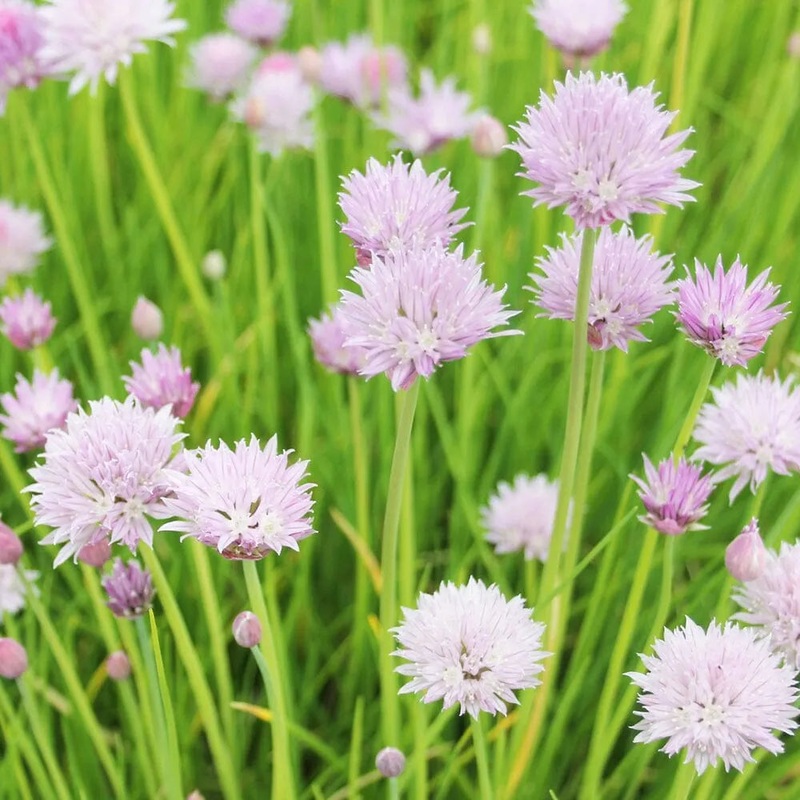
Chives feature clumps of thin, cylindrical leaves that grow in tufts from a central base. The leaves are bright green, hollow, and have a mild onion-like flavor. They can reach a height of 20-30 cm (8-12 inches) and are typically harvested by cutting them close to the base. In late spring to early summer, chives produce tall, upright flower stalks topped with small, star-shaped flowers. The flowers are usually pinkish-purple in color, but cultivars with white or lavender flowers are also available. The flowers attract pollinators like bees and butterflies.
Care Guide:
Light: Chives prefer full sun to partial shade. They thrive in a location that receives at least 4-6 hours of direct sunlight per day. However, they can tolerate some shade, especially in hotter climates.
Water: Chives prefer consistently moist but well-drained soil. Water the plants regularly, especially during dry spells, to keep the soil evenly moist. Avoid overwatering, as it can lead to root rot. Allow the soil to dry slightly between watering sessions.
Soil: Chives grow best in fertile, well-draining soil. Amend the soil with organic matter, such as compost or well-rotted manure, before planting. A slightly acidic to neutral soil pH (around 6.0-7.0) is ideal for their growth.
Temperature: Chives are cold-hardy plants and can tolerate a wide range of temperatures. They are hardy in USDA hardiness zones 3-9. They can be grown as perennials in colder regions and may die back in winter but re-emerge in spring. In hotter climates, provide them with partial shade or protect them from intense afternoon sun.
Fertilizer: Chives do not require heavy fertilization. Incorporate a balanced, slow-release fertilizer into the soil during planting or apply a water-soluble fertilizer every 4-6 weeks during the growing season. Avoid overfertilizing, as it can promote excessive foliage growth with fewer flowers.
Mulching: Apply a layer of organic mulch around the plants to help conserve soil moisture, suppress weed growth, and regulate soil temperature. Maintain a mulch depth of 5-7 cm (2-3 inches), keeping it away from the base of the plants.
Pruning: Regularly harvest the leaves of chives by cutting them close to the base. This not only encourages fresh growth but also prevents the plants from flowering too early. Deadhead the spent flowers to promote continuous blooming and prevent self-seeding.
Propagation: Chives can be propagated by dividing the clumps in early spring or fall. Dig up the clump, separate the bulbs, and replant them at the desired location. Ensure each division has healthy roots and foliage. Alternatively, chives can be grown from seeds, sown directly into the garden or started indoors and transplanted after the last frost date.
Pests and Diseases: Chives are relatively pest-resistant, but occasionally they can be affected by pests like aphids or onion thrips. Monitor the plants regularly and take appropriate measures, such as using insecticidal soap or organic insecticides, to control any infestations. Proper spacing and good air circulation can help prevent fungal diseases like powdery mildew.
Chives are versatile herbs that add flavor to a wide range of dishes, from salads and soups to garnishes. They also make attractive border plants or container specimens with their lovely flowers. By following these care guidelines, you can enjoy a bountiful harvest of fresh chives and enjoy the beauty they bring to your garden.