$32.50
$64.99
50% OFF! Hot items selling fast—Grab them before they're gone!
 Unconditional Satisfaction GuaranteeNo Shipping Fees Above 302 Months to Decide. Returns Simplified.
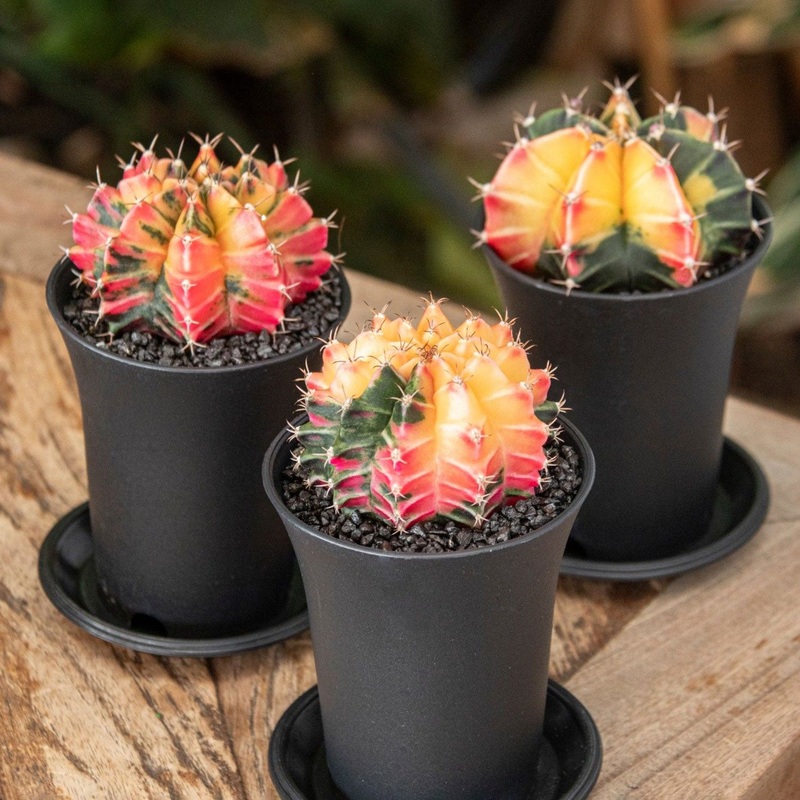
Variegated Gymnocalycium is a rare and highly prized cactus cultivar admired for its vibrant marbling of colours and compact, sculptural form. Belonging to the Cactaceae family and native to South America (Argentina, Brazil, Paraguay), Gymnocalycium species are well-known for their round, ribbed bodies and easy-care nature but the variegated forms are true collectors treasures.
The variegation appears as swirls and patches of pink, yellow, cream, green, and sometimes deep purple, caused by a natural mutation that reduces chlorophyll in certain areas of the plant. Each specimen is entirely unique, displaying a painterly mix of colours across its smooth, geometric ribs. Small spines emerge from the areoles, often in neat radial clusters that enhance the cactuss symmetry. In summer, Variegated Gymnocalycium may produce elegant trumpet-shaped flowers in white, pink, or pale red, adding delicate contrast to its colourful body.
Compact, artistic, and rare, this plant is a living sculpture a perfect fusion of natural geometry and vivid colour that captivates collectors and design enthusiasts alike.
Thrives in bright, indirect light or partial sun. Provide at least four to six hours of filtered sunlight daily to maintain its rich variegation. Too much direct sun may scorch the lighter, chlorophyll-free areas, while too little light can cause dull colours and slow growth.
Water sparingly. Allow the soil to dry out completely between waterings, then soak thoroughly and let excess drain away. During the growing season (spring and summer), water every 23 weeks, depending on temperature and humidity. In winter, reduce watering drastically once every 46 weeks or less to mimic the cactuss natural dormancy. Overwatering is the primary cause of root rot.
Temperature: Prefers warmth between 2030 C; tolerates brief dips to 10 C but avoid frost.
Humidity: Low humidity is ideal. Ensure good airflow around the plant to prevent fungal issues.
Use a gritty, free-draining cactus mix a blend of cactus soil, perlite, and coarse sand works perfectly. Terracotta pots are recommended for natural moisture regulation. Repot every 23 years in early spring, choosing a pot just slightly larger than the root ball.
Feed every 68 weeks during the growing season with a diluted cactus fertiliser low in nitrogen. Too much nitrogen encourages soft, weak growth and may disrupt the colour balance of the variegation. No feeding is needed during winter dormancy.
Remove any dry or dead flowers after blooming to keep the plant tidy. Avoid unnecessary handling, as the body is delicate and can scar easily. Clean spines gently with a soft brush to remove dust and keep the surface radiant.
A slow-growing species, Variegated Gymnocalycium typically reaches 510 cm in height and 612 cm in diameter. Its compact size makes it ideal for windowsills, desktop displays, or part of a collectors succulent arrangement. Mature plants may flower annually under bright, warm conditions.
Yellowing or mushy body: Overwatering or poor drainage.
Faded colour: Insufficient light.
Shrivelling: Extended drought or root damage.
Pests: Occasionally mealybugs or scale; remove with isopropyl alcohol or neem oil.
The genus Gymnocalycium, meaning naked calyx (referring to its smooth, hairless flower buds), comprises over 70 species native to Argentina, Uruguay, Paraguay, and Brazil. Variegated forms arise naturally or through selective cultivation, resulting in rare plants highly valued for their unpredictable patterns and hues.
Because variegation reduces chlorophyll, these cacti grow more slowly and may require slightly more light to photosynthesise effectively. Some extreme forms are even grafted onto hardier rootstocks such as Hylocereus to ensure survival. Beyond their beauty, Gymnocalyciums are also low-maintenance and air-purifying, contributing oxygen and calm to any indoor environment.
Light: Bright, indirect light or partial sun; avoid intense midday rays
Water: Let soil dry completely between watering
Temperature: 2030 C; avoid below 10 C
Humidity: Low humidity; prefers good airflow
Soil: Gritty, free-draining mix cactus soil, sand, perlite
Feed: Every 68 weeks in spring/summer
Growth: Compact, round cactus, 510 cm tall; marbled pink, yellow, cream, and green variegation
Toxicity note: Non-toxic to humans and pets but handle carefully to avoid injury from spines.
Display Variegated Gymnocalycium in a minimalist terracotta or matte ceramic pot to emphasise its vivid colouration. Its sculptural form pairs beautifully with neutral backdrops or grouped arrangements of other rare succulents such as Astrophytum myriostigma or Echinopsis subdenudata. For maximum impact, position it on a bright windowsill, sunny shelf, or curated succulent tray where its vivid tones can glow naturally under light, adding a pop of artistry and texture to any space.