$27.99
$34.99
50% OFF! Hot items selling fast—Grab them before they're gone!
 Unconditional Satisfaction GuaranteeNo Shipping Fees Above 302 Months to Decide. Returns Simplified.
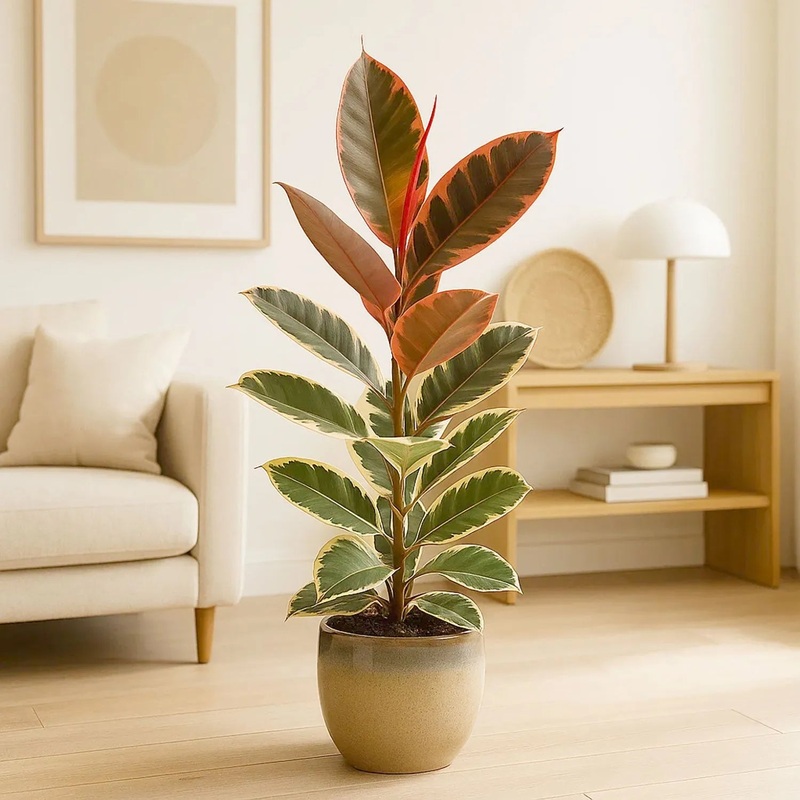
Ficus elastica Belize, also called the Belize Rubber Plant, is a striking variegated cultivar of the classic rubber tree, Ficus elastica. Native to South and Southeast Asia, rubber plants are prized for their bold foliage and robust growth.
What sets the Belize variety apart is its spectacular tri-colour leaves. Each glossy, oval-shaped leaf showcases a mix of deep green, creamy white, and soft pink to rosy-red tones, with new growth often flushed in pink. As leaves mature, the variegation becomes more defined, creating a vibrant, painterly effect. The plants upright habit and ornamental foliage make it an ideal statement piece for modern interiors.
Indoors, Ficus Belize can grow to 1.52.5 m tall, though its height is easily managed through pruning. It makes a dramatic floor plant, adding colour and structure to living rooms, offices, and conservatories.
Thrives in bright, indirect light. Direct sun may scorch its variegated leaves, while too little light may cause fading of the creamy and pink tones.
Water when the top 35 cm of soil feels dry. Ensure soil drains freely, and never let the plant sit in standing water. Reduce watering slightly in winter.
Temperature: Prefers warmth, 1828C. Protect from draughts and avoid exposure below 15C.
Humidity: Average household humidity is fine, though higher humidity keeps foliage lush. Mist occasionally or place near other plants.
Use a peat-free, well-draining mix enriched with perlite or bark. Repot every 12 years in spring to refresh the soil and allow root development.
Feed every 46 weeks in spring and summer with a balanced liquid fertiliser. No feeding is necessary in autumn and winter.
Prune to maintain the desired shape and size. Rotate regularly to encourage even growth. Wipe leaves with a damp cloth to remove dust and highlight their glossy variegation.
A moderate to fast grower, capable of reaching 2 m indoors. Can be pruned into a bushier form or trained into a tree-like specimen with a central stem.
Leaf drop: Often due to sudden environmental changes or overwatering.
Brown leaf edges: Caused by inconsistent watering or low humidity.
Loss of variegation: Insufficient light.
Pests: Occasionally attracts scale, mealybugs, or spider mites.
Rubber plants have been popular houseplants for over a century, originally grown for their resilience and striking foliage. The Belize cultivar is particularly sought after for its colourful variegation, bringing warmth and vibrancy to interiors. Like other Ficus elastica varieties, it also helps improve indoor air quality.
Quick Care Summary
Light: Bright, indirect; avoid harsh direct sun
Water: Let topsoil dry slightly; dont overwater
Temperature: 1828C; protect from cold
Humidity: Average to high; mist if very dry
Soil: Well-draining peat-free mix with perlite/bark
Feed: Monthly in spring/summer
Growth: Upright tree, 1.52.5 m indoors; variegated green, cream, and pink leaves