
$150.00
$4.00
50% OFF! Hot items selling fast—Grab them before they're gone!
 Unconditional Satisfaction GuaranteeNo Shipping Fees Above 302 Months to Decide. Returns Simplified.
Acer palmatum Koto-no-Ito is a striking and unusual Japanese maple, named after the Japanese phrase meaning “Harp Strings” a fitting name that reflects the trees graceful, narrow leaves which resemble fine threads or harp strings fluttering in the breeze. This elegant cultivar is especially admired for its delicate texture and sophisticated upright habit.
Foliage: Uniquely narrow, strap-like lobes give the leaves a finely threaded, almost bamboo-like appearance. In spring, new growth emerges fresh green with occasional red edges, turning a soft green through summer. Come autumn, the tree transforms into a spectacle of golden yellow, with touches of orange and red, often all on the same plant.
Habit: A small, upright, vase-shaped tree typically reaching 34 metres high, with a more slender spread of about 1.52 metres. This makes it ideal for narrow borders or smaller gardens where space is limited.
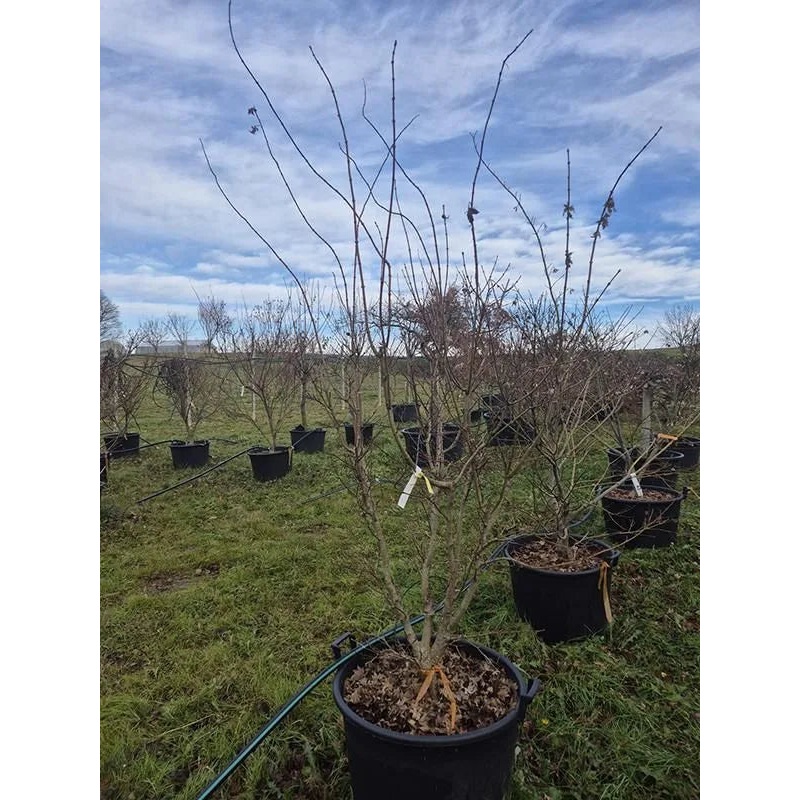
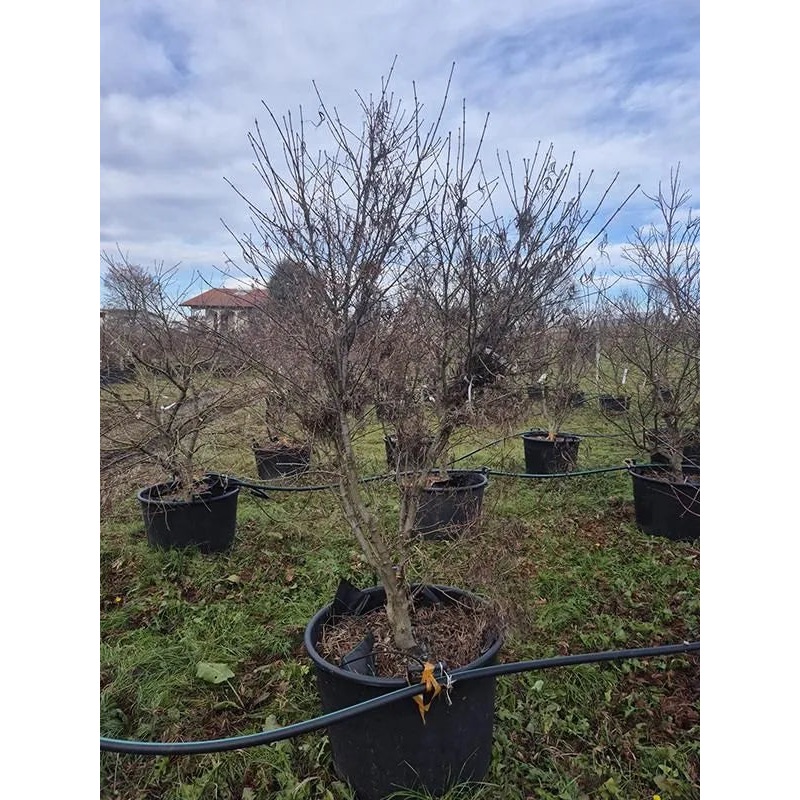
Bark: Smooth grey branches offer a neat winter framework after the leaves have fallen.
Because of its airy, finely textured foliage and refined shape, Koto-no-Ito stands out beautifully against darker evergreens or as part of a Japanese-style planting.
Prefers partial shade or dappled sunlight, though tolerates some morning sun.
Protect from strong afternoon sun which can scorch delicate leaves, particularly in hotter areas.
Always site in a sheltered position, out of cold, drying winds.
Important to avoid exposed spots. Wind can shred or dry the fine foliage and spoil its delicate effect.
Likes soil to be consistently moist but well-drained.
Water thoroughly in dry spells, especially while establishing or when grown in pots.
Mulch annually in spring to conserve moisture and keep shallow roots cool.
Prefers slightly acidic to neutral, fertile, humus-rich soil.
Avoid very alkaline or heavy clay soils. If needed, plant in raised beds or containers using ericaceous compost mixed with grit.
Feed lightly in spring with a balanced slow-release fertiliser or an acer-specific feed.
Avoid high-nitrogen fertilisers which encourage lush, soft growth prone to wind and frost damage.
Requires minimal pruning.
Remove any dead, damaged or crossing branches in late autumn or winter when dormant.
Avoid hard cutting back, which ruins its naturally elegant shape.
Generally pest-free and very low maintenance.
May occasionally see aphids on soft new growth.
Leaf scorch (brown edges or tips) is usually caused by drought, wind exposure or intense sun, not disease.
Excellent choice for a large pot or half-barrel, suitable for patios or courtyards.
Use ericaceous compost with added grit, ensure good drainage with pot feet, and keep well-watered.
In harsh winters, protect container roots by wrapping or moving pots to a sheltered position.