$35.99
$44.99
50% OFF! Hot items selling fast—Grab them before they're gone!

 Unconditional Satisfaction GuaranteeNo Shipping Fees Above 302 Months to Decide. Returns Simplified.
The Monkey Tail Cactus (Cleistocactus colademononis), sometimes also listed under its former name Hildewintera colademononis, is one of the most captivating and unusual cacti in cultivation. Native to the steep, rocky cliffs of Bolivia, this distinctive species is famous for its long, trailing stems densely coated in soft, white, hair-like spines that resemble a monkeys tail hence its charming common name.
Each cylindrical stem is covered in a layer of silky spines that shimmer in sunlight, giving the plant a tactile, almost furry appearance. Mature plants develop long, cascading stems that can exceed 23 metres in length, creating a stunning waterfall effect when displayed in a hanging basket. In late spring and summer, the Monkey Tail Cactus produces vivid reddish-orange tubular flowers that emerge along the upper portions of the stems, adding a dramatic pop of colour against its silvery-white texture.
This cactus is both sculptural and playful a conversation-starting specimen that embodies the rugged elegance of desert flora, softened by its irresistibly fluffy appearance.
Provide bright, indirect light to full sun. A south- or west-facing window is ideal, where it can enjoy several hours of direct sunlight each day. If grown indoors, rotate regularly to ensure even light exposure and prevent uneven growth. Low light will lead to weak, elongated stems and fewer flowers.
Water thoroughly but sparingly. Allow the soil to dry out completely between waterings. During the active growing season (spring and summer), water every 1014 days depending on temperature and light. In autumn and winter, reduce watering significantly only enough to prevent shrivelling. Overwatering is the most common cause of root rot.
Temperature: Prefers warmth between 1830 C. It can tolerate slightly cooler conditions down to 10 C but should be kept frost-free.
Humidity: Low to moderate humidity is best. Avoid placing the plant in overly damp or humid areas, as this can lead to fungal issues or rot.
Use a very well-draining cactus or succulent mix. For best results, add extra perlite, coarse sand, or pumice to enhance drainage and airflow. A hanging pot or elevated planter allows the stems to trail naturally. Repot every 23 years in spring to refresh the mix and encourage new growth.
Feed once a month during spring and summer with a diluted, low-nitrogen cactus fertiliser. This supports healthy growth and encourages blooming. Stop feeding in autumn and winter when the plant is resting.
Minimal pruning is required. Remove any dead or damaged stems using sterile scissors or shears. Avoid excessive handling although the spines appear soft, they can still irritate sensitive skin. Rotate occasionally to ensure even light and balanced growth.
Under the right conditions, the Monkey Tail Cactus grows rapidly, developing long, trailing stems up to several metres in length. Mature plants may produce multiple red-orange flowers each year, typically from the upper portions of the stems. After flowering, the stems may produce small, fuzzy seed pods.
Soft or blackened stems: Overwatering or poor drainage.
Shrivelled stems: Underwatering or extended drought.
Lack of flowers: Insufficient sunlight or lack of a cool, dry winter rest.
Pests: Can occasionally attract mealybugs or spider mites treat with neem oil or insecticidal soap and increase airflow.
The Monkey Tail Cactus is native to the mountainous regions of Santa Cruz, Bolivia, where it grows on rocky cliffs and ledges, often clinging to crevices where rainwater drains freely. Its dense coating of white spines helps protect it from intense sunlight and temperature fluctuations in its natural environment.
Cleisocactus colademononis (previously Hildewintera colademononis) has become a favourite among cactus collectors for its dramatic trailing habit, unique texture, and brilliant flowers. Despite its exotic appearance, its surprisingly easy to care for once its light and watering needs are met. Non-toxic to humans and pets, its a safe and fascinating addition to any plant collection.
Light: Bright indirect to full sun
Water: Allow soil to dry completely before watering
Temperature: 1830 C; avoid frost
Humidity: Low to moderate
Soil: Very well-draining cactus/succulent mix with perlite or pumice
Feed: Monthly during spring and summer
Growth: Long, trailing stems up to 23 m with bright red-orange flowers
Toxicity note: Non-toxic to humans and pets.
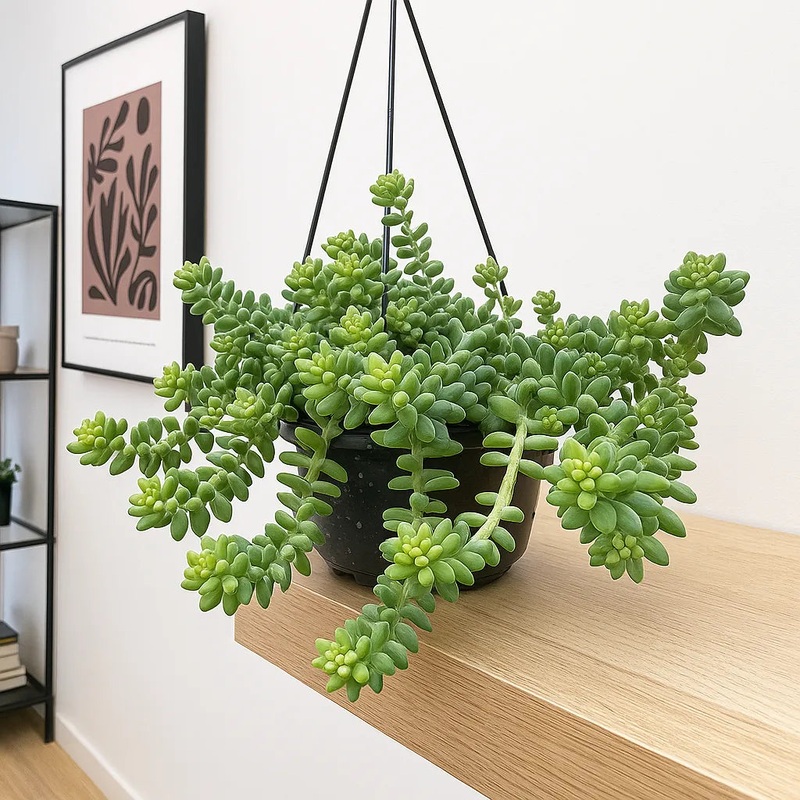
Display your Monkey Tail Cactus in a hanging basket or tall, open-sided planter to showcase its trailing, tail-like stems. Its striking silhouette pairs beautifully with other cascading succulents such as Rhipsalis baccifera or Sedum burrito. Position it in a bright conservatory, sunroom, or near a sunny window where the light can accentuate its shimmering spines. Whether used as a sculptural focal point or grouped with other desert plants, this cactus adds instant character and drama to any interior or glasshouse setting.