$32.50
$64.99
50% OFF! Hot items selling fast—Grab them before they're gone!

 Unconditional Satisfaction GuaranteeNo Shipping Fees Above 302 Months to Decide. Returns Simplified.
Hoya wibergiae is a rare and elegant species of Hoya (Apocynaceae family), originating from the Philippines. Like other Hoyas, it is an epiphytic climber that grows naturally on trees, producing trailing or climbing vines. Collectors prize it for its glossy foliage and delicate clusters of fragrant flowers.
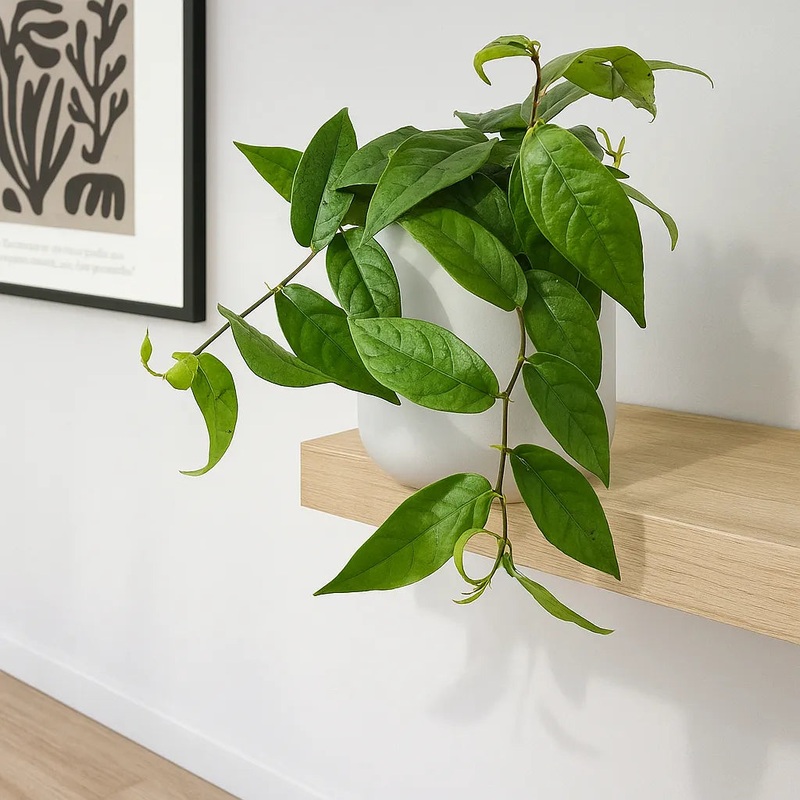
The leaves are narrow, elongated, and lanceolate, typically a medium to deep green with faint veining. Slightly leathery in texture, they have a subtle sheen and a graceful form that makes the plant attractive even out of bloom. Its climbing or trailing habit makes it suitable for trellises, hanging baskets, or cascading from shelves.
When mature, Hoya wibergiae produces umbels of 1525 star-shaped flowers. The blooms are waxy and typically white to pale pink, with a contrasting pink to red corona at the centre. They release a sweet fragrance, particularly noticeable in the evening, making the plant both ornamental and sensory.
Thrives in bright, indirect light. Gentle morning or late-afternoon sun is tolerated, but harsh midday rays may scorch foliage. Insufficient light reduces flowering.
Water when the top 23 cm of soil feels dry. Like most Hoyas, it dislikes soggy soil but should not be left completely dry for long. Reduce watering in winter when growth slows.
Temperature: Prefers 1828C. Protect from draughts and temperatures below 15C.
Humidity: Enjoys higher humidity (6080%) but adapts well to average household conditions. In very dry homes, mist lightly or use a humidifier.
Use a chunky, airy epiphytic mix orchid bark, perlite, and coco husk blended with peat-free compost works well. Hoyas enjoy being slightly root-bound, so repot only every 23 years.
Feed every 4 weeks in spring and summer with a balanced or high-potassium fertiliser to promote flowering. Stop feeding in winter.
Prune vines to maintain shape and encourage branching. Do not remove the flower peduncles (spurs), as Hoyas rebloom from the same sites.
A moderate grower, developing vines that can trail or climb over a metre. Flowers typically appear once the plant is mature and well-established.
Failure to flower: Insufficient light or premature removal of flower spurs.
Yellowing leaves: Overwatering or poor drainage.
Leaf shrivelling: Prolonged underwatering.
Pests: Occasionally mealybugs, aphids, or spider mites.
Hoya wibergiae is named in honour of a plant collector and has become popular with enthusiasts for its graceful vines and fragrant flowers. Though not as widely grown as Hoya carnosa or Hoya pubicalyx, it is an excellent choice for collectors who enjoy more unusual species with both ornamental foliage and blooms.
Quick Care Summary
Light: Bright, indirect; tolerates soft sun
Water: Allow topsoil to dry slightly; never waterlog
Temperature: 1828C; keep above 15C
Humidity: Moderate to high (6080%)
Soil: Chunky, airy epiphytic mix
Feed: Monthly in spring/summer; high-potassium for flowers
Growth: Climbing or trailing vine; elongated green leaves; umbels of white-pink fragrant flowers