$75.00
$149.99
50% OFF! Hot items selling fast—Grab them before they're gone!

 Unconditional Satisfaction GuaranteeNo Shipping Fees Above 302 Months to Decide. Returns Simplified.
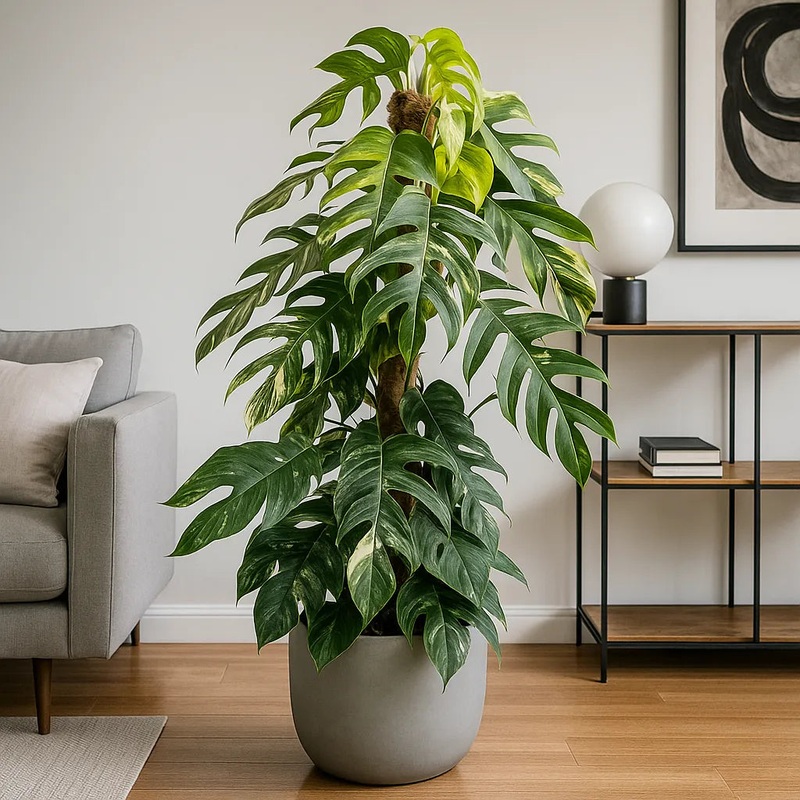
Philodendron sp. 96898 is a rare, unidentified or not-yet-formally-described Philodendron, often referred to by its collection or accession number. Many plants in the Araceae family are distributed under collection numbers before they are fully classified, and this makes them especially desirable among serious aroid collectors.
This Philodendron is admired for its unusual foliage, which typically features large, glossy leaves with deeply lobed or elongated shapes (appearance may vary depending on growing conditions and the exact collection). The leaves are a rich green with pronounced venation, giving the plant a bold, tropical presence. As the plant matures, the leaf size and lobing become more dramatic, making it an excellent statement species.
Like many Philodendrons, sp. 96898 is a climbing variety, producing aerial roots and thriving when given a moss pole or climbing board. Mature specimens in the right environment can produce impressive foliage that sets it apart from more common Philodendron varieties.
Requires bright, indirect light. Too little light will slow growth and reduce leaf size, while direct sunlight may scorch the leaves.
Water when the top 23 cm of soil feels dry. Keep evenly moist in the growing season but avoid waterlogging. Reduce watering slightly in autumn and winter.
Temperature: Thrives in 1828C. Avoid prolonged exposure below 15C.
Humidity: Prefers moderate to high humidity (6080%). Mist occasionally or use a humidifier in dry environments.
Use a chunky, well-draining aroid mix peat-free compost combined with orchid bark, perlite, and coco coir. Repot every 12 years in spring to refresh the mix and allow for healthy root growth.
Apply a balanced liquid fertiliser every 4 weeks in spring and summer. Stop feeding in winter when growth slows.
Prune lightly to control shape and encourage branching. Remove yellowing or damaged leaves at the base.
A moderately fast grower. With a moss pole or climbing support, it produces increasingly larger and more defined leaves as it matures.
Yellowing leaves: Overwatering or poor drainage.
Leggy growth: Insufficient light.
Brown edges: Low humidity or inconsistent watering.
Pests: Occasionally thrips, mealybugs, or spider mites.
Philodendron species are widely distributed across tropical America, and new forms or hybrids are frequently introduced into cultivation under numbers like 96898. These identifiers often come from botanical collections, research stations, or growers, and represent plants that may not yet have a formal scientific description. Collectors prize them for their rarity, mystery, and potential uniqueness.
Quick Care Summary
Light: Bright, indirect; avoid direct sun
Water: Keep lightly moist; let topsoil dry slightly
Temperature: 1828C; avoid below 15C
Humidity: Moderate to high (6080%)
Soil: Chunky, free-draining aroid mix
Feed: Monthly in spring/summer
Growth: Climbing Philodendron with large, glossy, lobed leaves