$32.50
$64.99
50% OFF! Hot items selling fast—Grab them before they're gone!

 Unconditional Satisfaction GuaranteeNo Shipping Fees Above 302 Months to Decide. Returns Simplified.
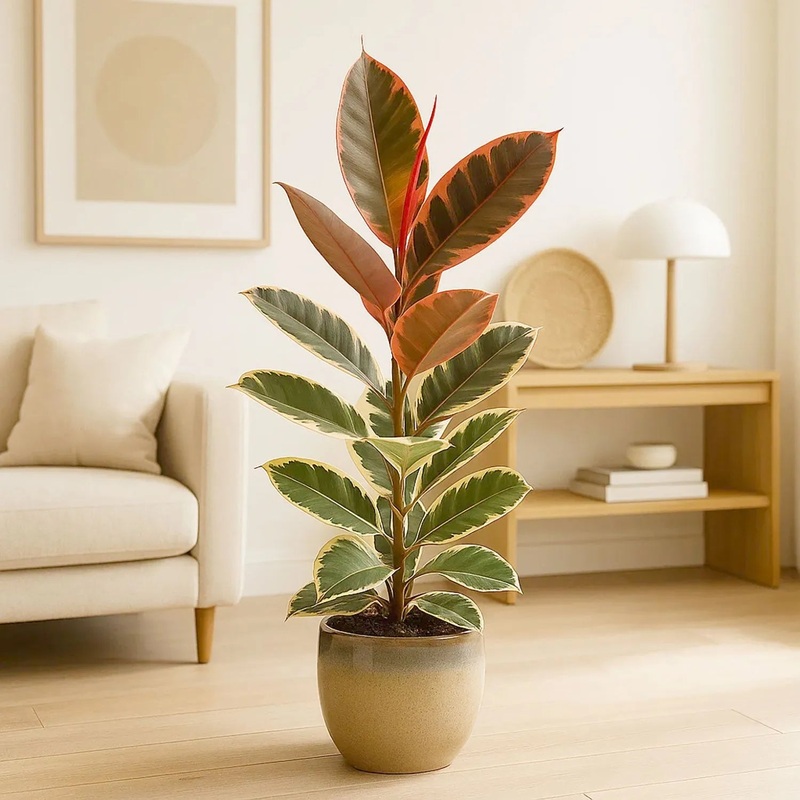
Ficus altissima, often referred to as the Council Tree, is a bold and fast-growing tropical fig, prized for its striking lime-green and yellow variegated foliage, upright growth, and easy-going nature. Native to Southeast Asia, this species resembles the well-known Ficus elastica but offers a brighter, more vibrant colour palette. The cultivar commonly sold as Ficus altissima Yellow Gem features ovate, glossy leaves with chartreuse centres and darker green margins, giving it a painted, luminous appearance. It makes an excellent choice for modern interiors needing a splash of colour and vertical greenery. Less fussy than Ficus lyrata and easier to grow than many variegated plants, Ficus altissima is ideal for both novice and experienced plant owners who want a high-impact, low-maintenance indoor tree.
Indoors: Thrives in bright, indirect light. The more light it receives, the brighter the variegation.
Direct sun: Tolerates gentle morning sun but avoid harsh midday exposure.
Low light: Will survive, but variegation may fade and growth may become leggy.
Ideal temperature: 1826C (6579F)
Minimum temperature: Keep above 13C (55F); sensitive to cold air and sudden drafts.
Humidity: Tolerant of average humidity but appreciates occasional misting or pebble trays in dry environments.
Watering frequency: Allow the top 57 cm of soil to dry between waterings. Water thoroughly and allow excess to drain.
Winter: Water less frequently as the plant enters a slower growth period.
Tip: Avoid overwatering root rot is the most common issue.
Soil type: Well-draining houseplant compost with added perlite or bark to aid aeration.
pH: Slightly acidic to neutral (6.07.0)
Repotting: Every 12 years or when rootbound. Choose a sturdy pot for stability as the plant grows tall.
Growing season (springsummer): Feed monthly with a balanced houseplant fertiliser.
Autumnwinter: Reduce feeding or pause during dormancy.
Pruning: Responds well to pruning to shape or limit height. Prune in spring or early summer.
Leaf care: Wipe with a damp cloth to remove dust and maintain its bright appearance.
Growth habit: Upright and tree-like. Can be grown as a single-stem specimen or a bushier form with pruning.
Stem cuttings: Propagate using semi-hardwood cuttings rooted in water or moist compost.
Air layering: Suitable for mature plants if propagation is needed without major pruning.
Common pests: Mealybugs, spider mites, scale, and aphids.
Symptoms: Yellowing leaves, sticky residue, or visible pests.
Treatment: Wipe affected areas and treat with neem oil or insecticidal soap.
Common issues:
Leaf drop: Often caused by environmental stress, such as sudden light or watering changes.
Fading variegation: Typically due to insufficient light.
Toxicity: Toxic if ingested by pets or humans. The milky sap may irritate skin or mucous membranes.
Precaution: Keep out of reach of children and animals. Wear gloves when pruning.
A bright, uplifting alternative to darker-foliaged figs like Ficus elastica.
Perfect for homes and offices needing a low-maintenance, colour-rich foliage plant.
Pairs beautifully with neutral interiors, ceramic planters, and modern dcor styles.
Can be trained as a tall indoor tree or kept compact with occasional pruning.
One of the easiest variegated indoor plants for consistent growth and bold visual impact.