$31.96
$39.95
50% OFF! Hot items selling fast—Grab them before they're gone!

 Unconditional Satisfaction GuaranteeNo Shipping Fees Above 302 Months to Decide. Returns Simplified.
Rhipsalis paradoxa Minor is a rare and fascinating epiphytic cactus from the Cactaceae family, native to the tropical rainforests of South America. Unlike desert cacti, Rhipsalis species grow naturally in the canopies of trees, where they absorb moisture from the air and dappled sunlight through the forest canopy.
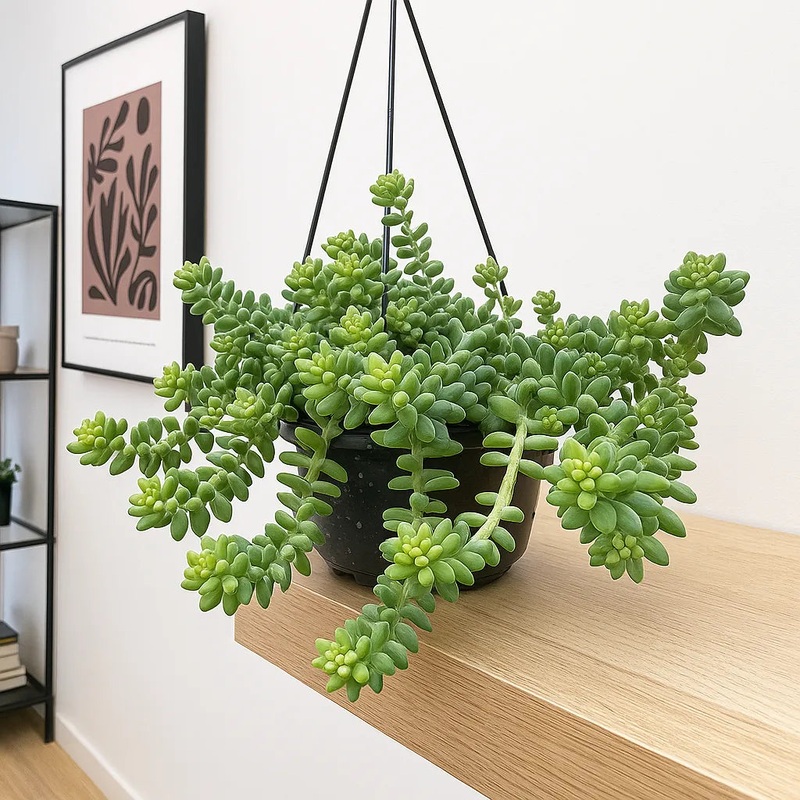
The Minor form of Rhipsalis paradoxa is a compact variant distinguished by its smaller, more delicate segments and intricate, geometric growth pattern. Its stems are thick, jointed, and distinctly angular, forming interlocking chains of fleshy, three-sided segments that trail elegantly from the pot. The stems are a vibrant green, occasionally developing reddish tones in bright light.
Over time, the plant creates long, cascading chains that can reach 6090 cm in length, making it ideal for hanging baskets or high shelves. In spring, it may also produce small, creamy-white flowers followed by decorative, translucent berries. Subtle, architectural, and easy to care for, Rhipsalis paradoxa Minor is a unique addition to any plant collection.
Thrives in bright, indirect light or light shade. Avoid harsh direct sunlight, which can cause the stems to discolour or scorch. Excellent for east-facing windows or filtered light through sheer curtains.
Keep the soil lightly moist during the growing season (spring and summer). Water when the top 23 cm of soil feels dry. Reduce watering in autumn and winter, allowing the soil to dry out more between waterings. Never let the plant sit in water.
Temperature: Prefers 1826C. Protect from cold draughts and avoid exposure below 12C.
Humidity: Appreciates moderate to high humidity (5070%), typical of its rainforest origins. Mist occasionally or keep near other plants.
Use a free-draining, airy mix cactus compost blended with orchid bark, perlite, and coco coir is ideal. Avoid dense soils that retain too much moisture. Repot every 23 years in spring to refresh the mix.
Feed monthly during spring and summer with a diluted cactus or epiphytic fertiliser. Do not feed during the dormant winter period.
Trim stems to control length or shape as desired. Pruned sections can easily be propagated by replanting or rooting in soil or sphagnum moss.
A slow to moderate grower that eventually produces long, cascading chains of jointed segments. Each stem can reach up to 90 cm long under good conditions.
Shrivelled segments: Underwatering or very low humidity.
Soft or blackened stems: Overwatering or poor drainage.
Faded colour: Excessive light exposure.
Pests: Occasionally mealybugs or scale insects.
Rhipsalis paradoxa is one of the most distinctive species in its genus, known for its geometric, chain-like growth. The Minor variant is especially popular among collectors for its compact size and elegant habit. Its trailing form, low-maintenance nature, and soft green tone make it ideal for adding texture to tropical or minimalist interiors.
Quick Care Summary
Light: Bright, indirect or lightly shaded
Water: Lightly moist; allow topsoil to dry slightly
Temperature: 1826C; protect below 12C
Humidity: Moderate to high (5070%)
Soil: Airy, free-draining cactus/orchid mix
Feed: Monthly in spring/summer
Growth: Cascading epiphytic cactus; thick jointed stems up to 90 cm long; creamy-white blooms and translucent berries