$4.76
$5.95
50% OFF! Hot items selling fast—Grab them before they're gone!
 Unconditional Satisfaction GuaranteeNo Shipping Fees Above 302 Months to Decide. Returns Simplified.
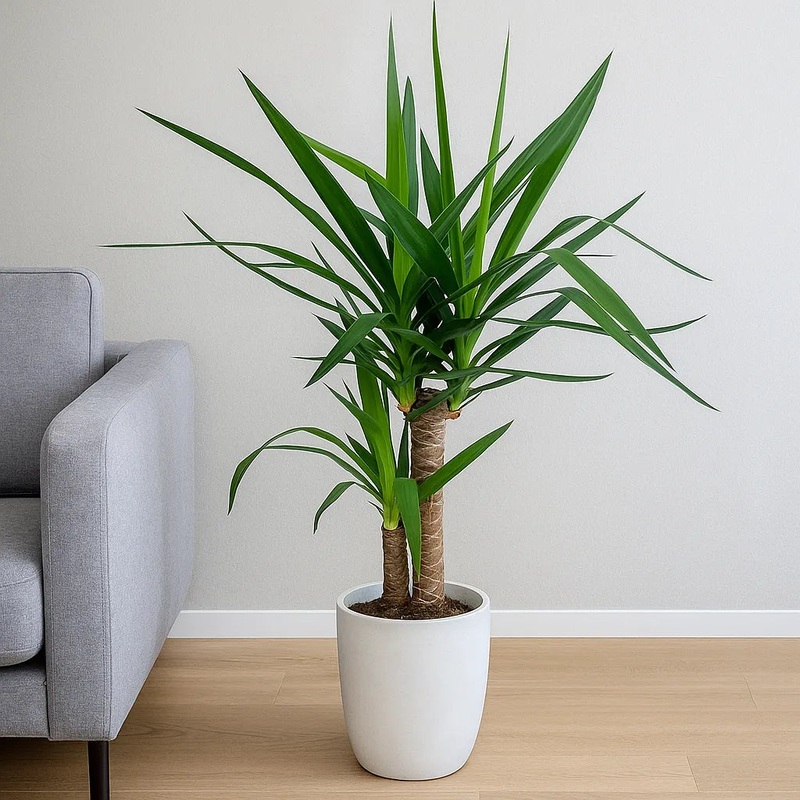
Yucca elephantipes, also known as the Spineless Yucca or Giant Yucca, is a striking, architectural houseplant native to Central America and the Caribbean. A member of the Asparagaceae family, it is prized for its sculptural shape, resilience, and low-maintenance nature making it one of the most popular large indoor plants.
The plant features tall, sturdy canes (trunks) topped with rosettes of long, sword-like green leaves that fan out elegantly, creating a bold and contemporary look. Unlike many other Yucca species, elephantipes has soft, non-spiny leaves, making it ideal for homes and offices. Mature plants can develop multiple stems, creating a layered, tree-like silhouette that adds instant impact to any interior.
Perfect for modern spaces, Yucca elephantipes thrives on minimal care and is one of the best plants for those who want height, structure, and tropical style with very little maintenance.
Thrives in bright, indirect to full light. It can tolerate some direct sunlight, which helps maintain strong growth and vibrant foliage. However, in very intense midday sun, some leaf scorching may occur.
Water sparingly. Allow the top 58 cm of soil to dry out completely between waterings. Overwatering is the most common cause of problems, as Yuccas store water in their thick trunks. In winter, water once every few weeks or when the soil feels dry.
Temperature: Prefers 1828C but can tolerate cooler temperatures down to 10C. Avoid cold draughts or frost.
Humidity: Adapts well to normal household humidity and doesnt require misting.
Use a gritty, well-draining compost, such as cactus or succulent mix. Ensure the pot has drainage holes to prevent standing water. Repot every 23 years in spring, using a heavy container to support the tall stems.
Feed monthly during spring and summer with a balanced, diluted liquid fertiliser. Stop feeding in winter when growth slows.
Remove yellowing or dead leaves by gently pulling them downward from the trunk. You can also cut back stems if the plant becomes too tall it will resprout from the cut area. Dust the leaves regularly to keep them clean and healthy.
A slow to moderate grower that can reach 13 metres indoors. It often develops multiple canes over time, giving it a sculptural, multi-tiered appearance.
Yellow leaves: Overwatering or poor drainage.
Brown leaf tips: Underwatering or exposure to cold draughts.
Soft trunks: Sign of rot caused by too much water.
Pests: Occasionally spider mites or mealybugs wipe leaves regularly to prevent infestations.
The name elephantipes (elephant foot) refers to the swollen, woody base of the trunk, which resembles an elephants leg. In its native habitat, it can grow up to 9 metres tall, but indoors it remains far more compact.
This plant is not only beautiful but also incredibly hardy, tolerant of neglect, and excellent at purifying indoor air. Its strong vertical form and clean lines make it a staple of minimalist and contemporary dcor.
Quick Care Summary
Light: Bright, indirect to full sun
Water: Sparingly; let soil dry completely between waterings
Temperature: 1828C; tolerates down to 10C
Humidity: Average indoor; no misting needed
Soil: Gritty, well-draining cactus compost
Feed: Monthly in spring/summer
Growth: Upright plant, 13 m; multiple canes topped with sword-like green leaves
Toxicity Note: Yucca elephantipes is mildly toxic if ingested, especially to pets. Keep away from cats and dogs, as ingestion may cause mild irritation.
Styling Tip:
Place Yucca elephantipes in a bright corner or by a window to accentuate its architectural silhouette. It pairs beautifully with other structural plants like Sansevieria and Dracaena, adding height and drama to any modern interior.