
$146.00
$2.00
50% OFF! Hot items selling fast—Grab them before they're gone!
 Unconditional Satisfaction GuaranteeNo Shipping Fees Above 302 Months to Decide. Returns Simplified.
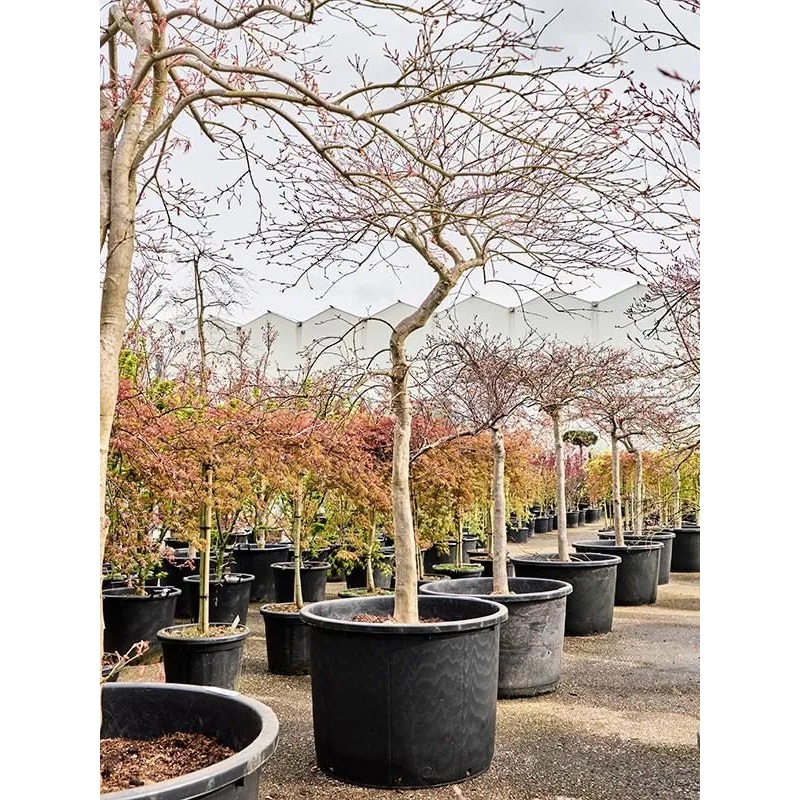
Acer palmatum Osakazuki is one of the most celebrated Japanese maples, renowned for producing some of the finest and most intense autumn colour of all acers. Unlike many Japanese maples prized mainly for their delicate leaf shapes, Osakazuki stands out for its broad foliage and exceptional autumn display.
Foliage: Large, seven-lobed, broadly palmate leaves emerge bright green in spring, maintaining a rich green through summer. In autumn, they turn to a spectacular brilliant scarlet-crimson, widely regarded as one of the best for consistent and vivid autumn colour.
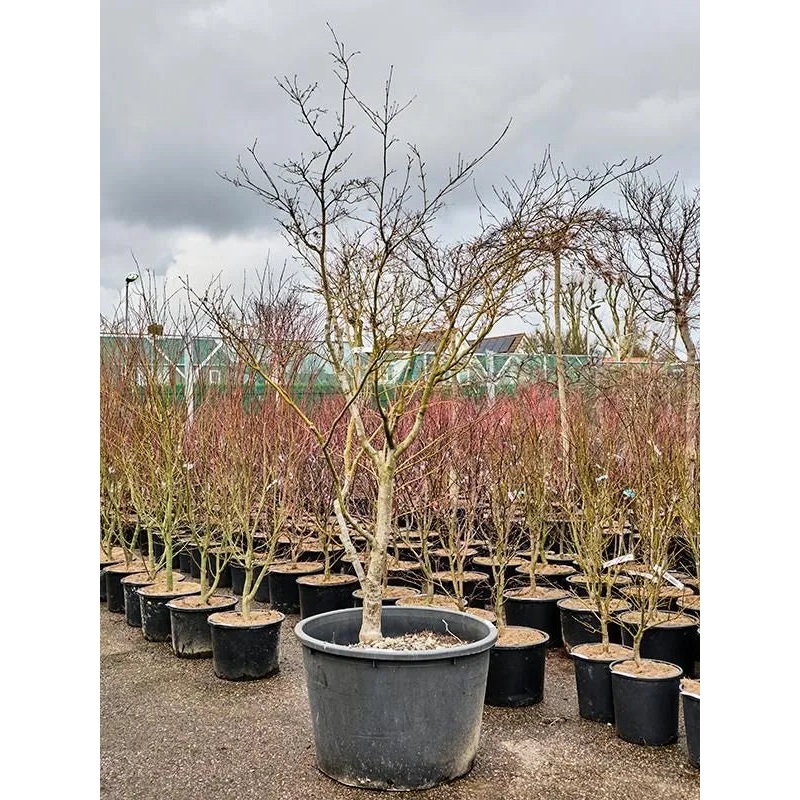
Habit: Forms a graceful, upright small tree with a broadly rounded canopy, typically reaching 46 metres high with a similar spread over many years, developing a handsome, well-balanced shape.
Bark: Smooth grey branches add subtle winter structure.
Because of its reliable, intense autumn show, Osakazuki is often chosen as a specimen tree where its seasonal brilliance can be fully appreciated.
Prefers partial shade or dappled sunlight.
Tolerates more sun than many Japanese maples and can be planted in positions with morning to early afternoon sun, which helps intensify autumn colour.
Still benefits from some protection from hot, late afternoon sun to reduce leaf scorch.
Needs a sheltered spot, out of strong winds, which can dry or damage the leaf margins.
Likes soil to be consistently moist but well-drained.
Water deeply during dry periods, particularly when young or grown in pots.
Apply a mulch in spring to conserve moisture and keep roots cool.
Prefers slightly acidic to neutral, fertile, humus-rich soil.
Avoid very alkaline or heavy clay soils. If necessary, plant in raised beds or large containers using ericaceous compost with added grit for drainage.
Feed lightly in spring with a balanced slow-release fertiliser or a feed specially formulated for acers.
Avoid high-nitrogen feeds which encourage soft, lush growth more susceptible to wind and frost.
Requires minimal pruning.
Remove any dead, damaged or crossing branches in late autumn or winter while dormant.
Avoid hard cutting back which spoils its natural graceful form.
Generally very healthy and trouble-free.
May occasionally attract aphids on new growth.
Leaf scorch (brown edges or tips) is usually caused by drought, strong winds or excessive sun, rather than disease.
Can be grown successfully in large containers.
Use ericaceous compost mixed with grit, ensure the pot drains freely, and raise it on pot feet.
Water consistently and protect container roots in harsh winters by wrapping or moving to a sheltered spot.