
$145.00
$2.00
50% OFF! Hot items selling fast—Grab them before they're gone!

 Unconditional Satisfaction GuaranteeNo Shipping Fees Above 302 Months to Decide. Returns Simplified.
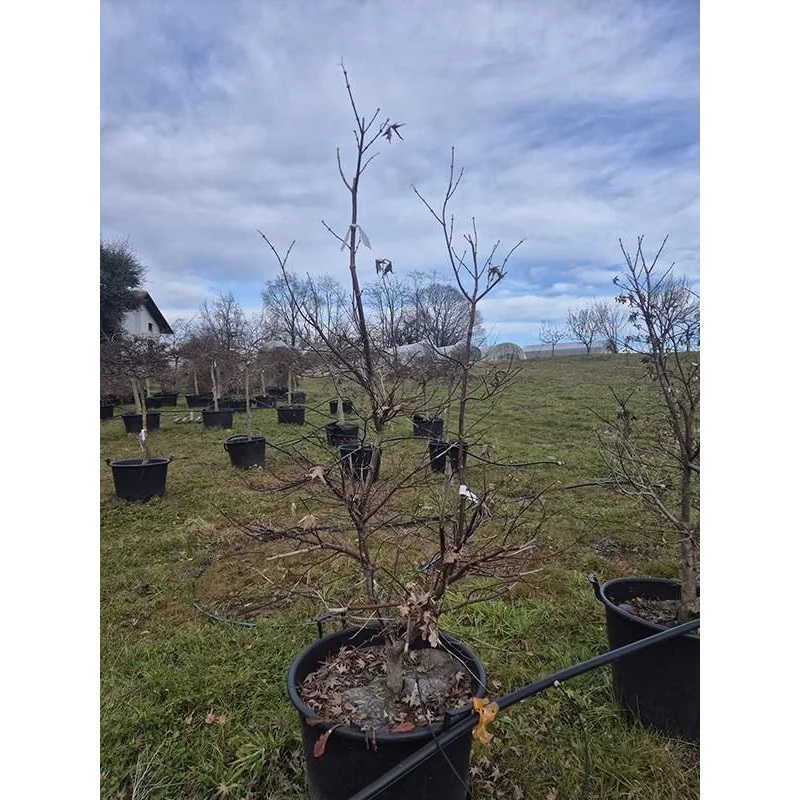
Enkianthus perulatus, commonly known as the White Enkianthus, is a beautiful, slow-growing deciduous shrub native to Japan. Highly prized for its delicate bell-shaped spring flowers, attractive summer foliage and brilliant autumn colour, it is a superb choice for adding refined seasonal interest to woodland gardens, acid borders or shaded courtyard plantings.
Flowers: In late spring (April to May), clusters of small, pure white, urn-shaped flowers dangle beneath the branches, resembling tiny lanterns. They provide a charming, understated display and are lightly fragrant.
Foliage: The neat, finely-toothed green leaves form elegant whorls along the slender stems. In autumn, the foliage transforms into a spectacular show of scarlet, crimson and orange, often rivalling the best Japanese maples.
Form: Naturally grows into a compact, upright, rounded shrub, typically reaching 1.52 metres high with a similar spread, making it ideal for smaller gardens.
Bark: Smooth grey stems add subtle winter structure.
Because of its graceful habit and outstanding autumn colour, Enkianthus perulatus makes a perfect companion to rhododendrons, azaleas, camellias and Japanese maples.
Prefers partial shade or dappled sunlight.
Will tolerate more sun in cooler, moist climates, but best protected from hot afternoon sun to prevent leaf scorch.
Likes a sheltered position, out of strong, drying winds which can damage young leaves and reduce flowering.
Likes soil to be consistently moist but well-drained.
Water well during dry spells, especially when establishing. Avoid letting the soil dry out completely.
Requires acidic to neutral, fertile, humus-rich soil.
Avoid alkaline conditions (lime-rich soils), which can lead to chlorosis (yellowing of leaves).
Ideal conditions are similar to those for rhododendrons and camellias if needed, plant in raised beds with ericaceous compost, or in containers with ericaceous compost mixed with fine bark and grit for drainage.
Feed in spring with an ericaceous fertiliser to support healthy growth and flowering.
An annual mulch of leaf mould or compost helps retain moisture and improves soil structure.
Very low maintenance.
Requires little or no pruning simply remove any dead or damaged wood after flowering to maintain shape.
Generally trouble-free and rarely bothered by pests or diseases.
In alkaline soils, leaves may become pale or yellowish rectify by applying sequestered iron and improving soil acidity.
Well-suited to large containers in shaded patios or terraces.
Use ericaceous compost, ensure pots have good drainage holes and raise on feet.
Water consistently and protect roots in winter by wrapping or moving to a sheltered spot.