$27.99
$34.99
50% OFF! Hot items selling fast—Grab them before they're gone!

 Unconditional Satisfaction GuaranteeNo Shipping Fees Above 302 Months to Decide. Returns Simplified.
Maranta leuconeura var. kerchoveana, commonly known as the Green Prayer Plant or Rabbits Foot Maranta, is a tropical beauty native to the rainforests of Brazil. A cherished member of the Marantaceae family, its celebrated for its decorative foliage, rhythmic leaf movements, and easy-going nature making it a favourite among both beginner and experienced plant collectors.
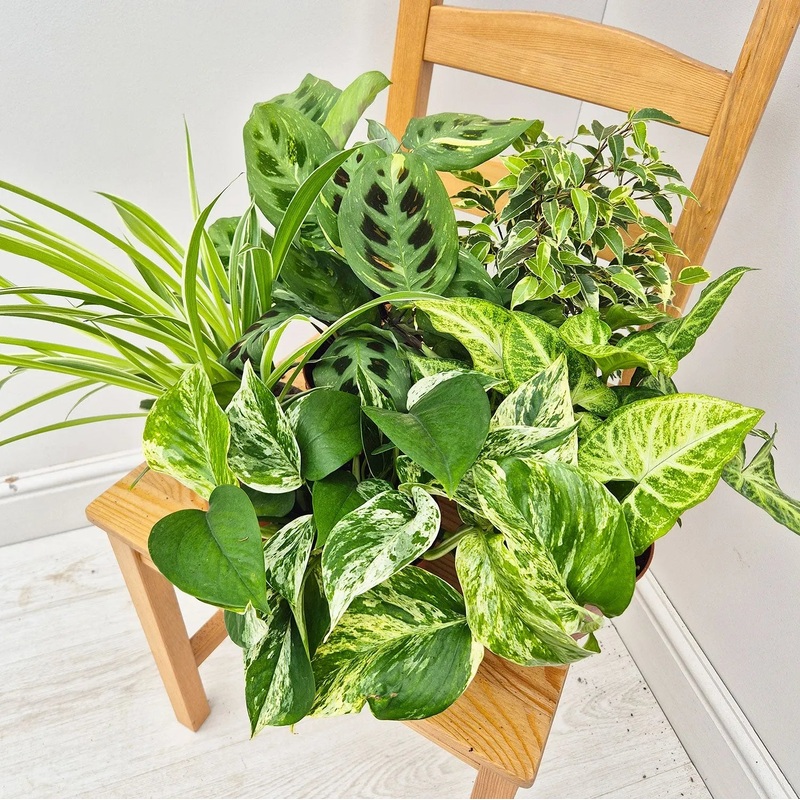
Its oval leaves are a soft, velvety green marked with symmetrical, chocolate-brown patches along the midrib a pattern reminiscent of a rabbits footprints, which gives it its nickname. The undersides of the leaves are a pale silvery-green, adding depth and contrast. Each evening, the leaves gently fold upward in a prayer motion, a characteristic behaviour shared by all Marantas and Calatheas.
Graceful, adaptable, and endlessly charming, Maranta kerchoveana brings a lush, lively feel to any space, infusing interiors with tropical softness and natural rhythm.
Thrives in bright, indirect light but tolerates medium or lower light conditions. Avoid direct sunlight, which can fade the leaf markings. It performs beautifully in softly lit spaces such as north- or east-facing rooms, where its patterning remains vibrant.
Keep the soil evenly moist but never soggy. Water when the top 23 cm of soil feels slightly dry. Use filtered or rainwater if possible, as fluoride and chlorine in tap water can cause browning on the leaves. In winter, reduce watering frequency slightly while maintaining humidity.
Temperature: Prefers warmth between 1828 C. Avoid cold drafts or sudden temperature changes.
Humidity: High humidity (6080%) helps maintain lush foliage and prevents crispy tips. Mist regularly, use a humidifier, or place on a pebble tray to boost ambient moisture.
Use a light, airy mix that retains moisture without becoming compacted compost blended with perlite and coco coir works perfectly. This allows water to flow freely while keeping roots comfortably moist. Repot every 12 years in spring to refresh the mix and encourage new growth.
Feed every 46 weeks during spring and summer with a diluted, balanced liquid fertiliser. Avoid overfeeding, as salts can accumulate and damage sensitive roots. Pause feeding in autumn and winter.
Remove any yellow, damaged, or older leaves at the base to encourage fresh growth. Wipe the leaves gently with a damp cloth to remove dust and enhance their natural sheen. Rotate occasionally to ensure even growth and balanced foliage.
A moderately fast grower, Maranta kerchoveana typically reaches 3040 cm in height and spread indoors. It forms a dense, trailing mound of foliage that can spill gracefully from pots or hanging planters. When mature and well cared for, it may produce small, delicate white flowers on slender stems.
Brown tips: Low humidity or mineral build-up in water.
Yellow leaves: Overwatering or poor drainage.
Curling leaves: Underwatering or too much direct sunlight.
Pests: Occasionally affected by spider mites or thrips treat with neem oil and maintain humidity.
Native to the shaded floors of Brazils tropical rainforests, Maranta kerchoveana thrives in warm, humid environments. Its name honours Belgian botanist M. Kerchove de Denterghem, who helped popularise tropical plants in Europe during the 19th century.
Like all Prayer Plants, it exhibits nyctinastic movement folding its leaves upward at night as if in prayer. Non-toxic and pet-safe, its an excellent choice for homes with animals or children. Beyond its visual appeal, it symbolises gratitude, connection, and balance a fitting reminder of calm in any interior space.
Light: Bright, indirect to medium light; avoid direct sun
Water: Keep soil evenly moist; use filtered or rainwater
Temperature: 1828 C; avoid below 15 C
Humidity: High (6080%)
Soil: Moisture-retentive, well-draining mix compost, perlite, coco coir
Feed: Every 46 weeks in spring/summer
Growth: 3040 cm; green leaves with brown patches and silvery undersides
Toxicity note: Non-toxic to humans and pets.
Display Maranta kerchoveana in a decorative ceramic or terracotta pot to highlight its intricate foliage pattern. It looks beautiful as a tabletop accent or in a hanging planter where its leaves can trail gracefully. Pair with darker-leaved tropicals such as Philodendron Imperial Green or Zamioculcas zamiifolia Raven for contrast, or group with other Marantas for a cohesive Prayer Plant collection. Its rhythmic leaf movement and organic patterns bring tranquillity, texture, and life to any indoor environment.