
$14.39
$17.99
50% OFF! Hot items selling fast—Grab them before they're gone!

 Unconditional Satisfaction GuaranteeNo Shipping Fees Above 302 Months to Decide. Returns Simplified.
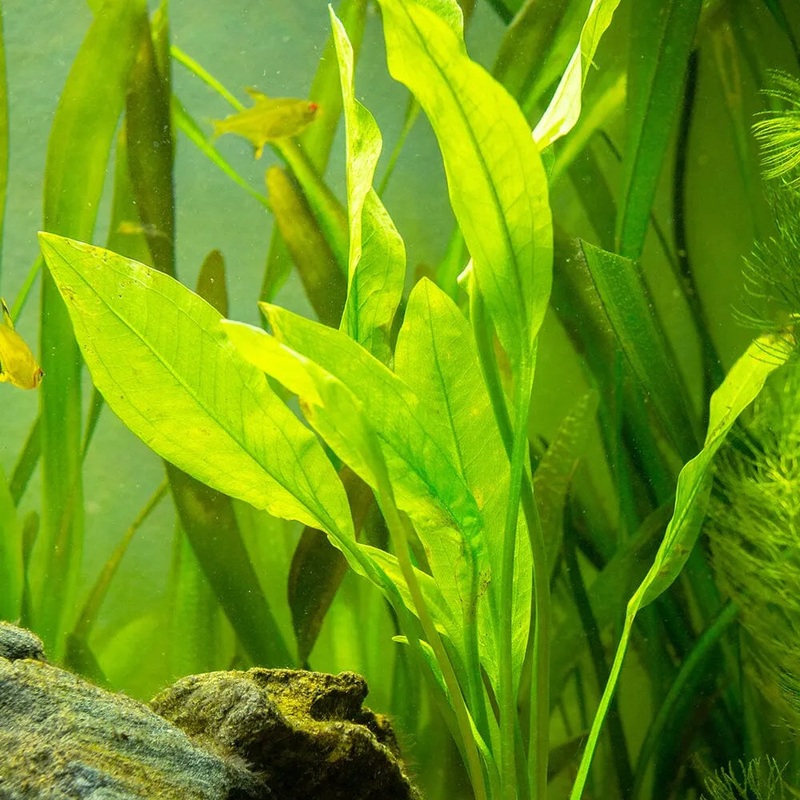
Potamogeton perfoliatus, commonly known as perfoliate pondweed, is an aquatic plant species that can be found in various regions around the world. It is known for its distinctive leaf structure and attractive appearance. Here is a detailed description and care guide for Potamogeton perfoliatus:
Description:
Potamogeton perfoliatus has long, slender stems that can reach lengths of up to 1 meter (3 feet). The leaves are arranged opposite each other on the stem and appear to be wrapped around the stem, giving the impression that the stem passes through the leaf. The leaves are lanceolate or oblong in shape, typically measuring around 3-10 cm (1-4 inches) in length. The colour of the leaves can range from bright green to reddish-brown, depending on the lighting and nutrient conditions. The plant may produce small, inconspicuous flowers on spikes that emerge above the water’s surface.
Care Guide:
Lighting: Potamogeton perfoliatus requires moderate to high lighting conditions for optimal growth. Provide at least 2-3 watts per gallon of full-spectrum light to promote healthy growth.
Water Parameters: Maintain a water temperature between 18-26C (64-79F). The pH level should be slightly acidic to slightly alkaline, ranging from 6.5-7.5. The water hardness can vary, but a range of 3-12 dGH is generally suitable.
Substrate:
Potamogeton perfoliatus can be grown with or without a substrate. If grown without substrate, the plant can be anchored using weights or placed in mesh pots filled with aquatic plant substrate or clay. If grown with substrate, a nutrient-rich substrate can help support its growth.
Nutrient Requirements: Regular fertilization is important to provide essential nutrients to Potamogeton perfoliatus. Liquid fertilizers or root tabs can be used to supply macro and micronutrients. Carbon dioxide (CO2) supplementation is not necessary but can promote faster growth and denser foliage if desired.
Water Flow and Oxygenation:
Potamogeton perfoliatus prefers moderate water flow. It benefits from water movement to distribute nutrients and prevent debris from accumulating on the leaves. Adequate water movement also promotes oxygenation, benefiting both the plant and aquatic organisms.
Propagation:
Potamogeton perfoliatus can propagate through runners or by planting stem cuttings. Healthy side shoots or stems can be trimmed and replanted in the substrate or floated on the water’s surface to develop new plants.
Compatibility:
Potamogeton perfoliatus is generally compatible with a variety of fish and invertebrates. It provides cover and spawning areas for fish and serves as a habitat for aquatic organisms. However, be mindful of potential herbivorous fish that may nibble on the leaves.
Regular maintenance, including trimming and nutrient supplementation, will help maintain the health and appearance of Potamogeton perfoliatus. Monitor the plant for any signs of nutrient deficiency or excessive growth, as well as the overall condition of the aquarium or pond. With proper care, Potamogeton perfoliatus can contribute to a vibrant and natural aquatic environment.